
Natural Remedies for Fever Blisters
This post may contain affiliate links.
Click here to read my affiliate policy.
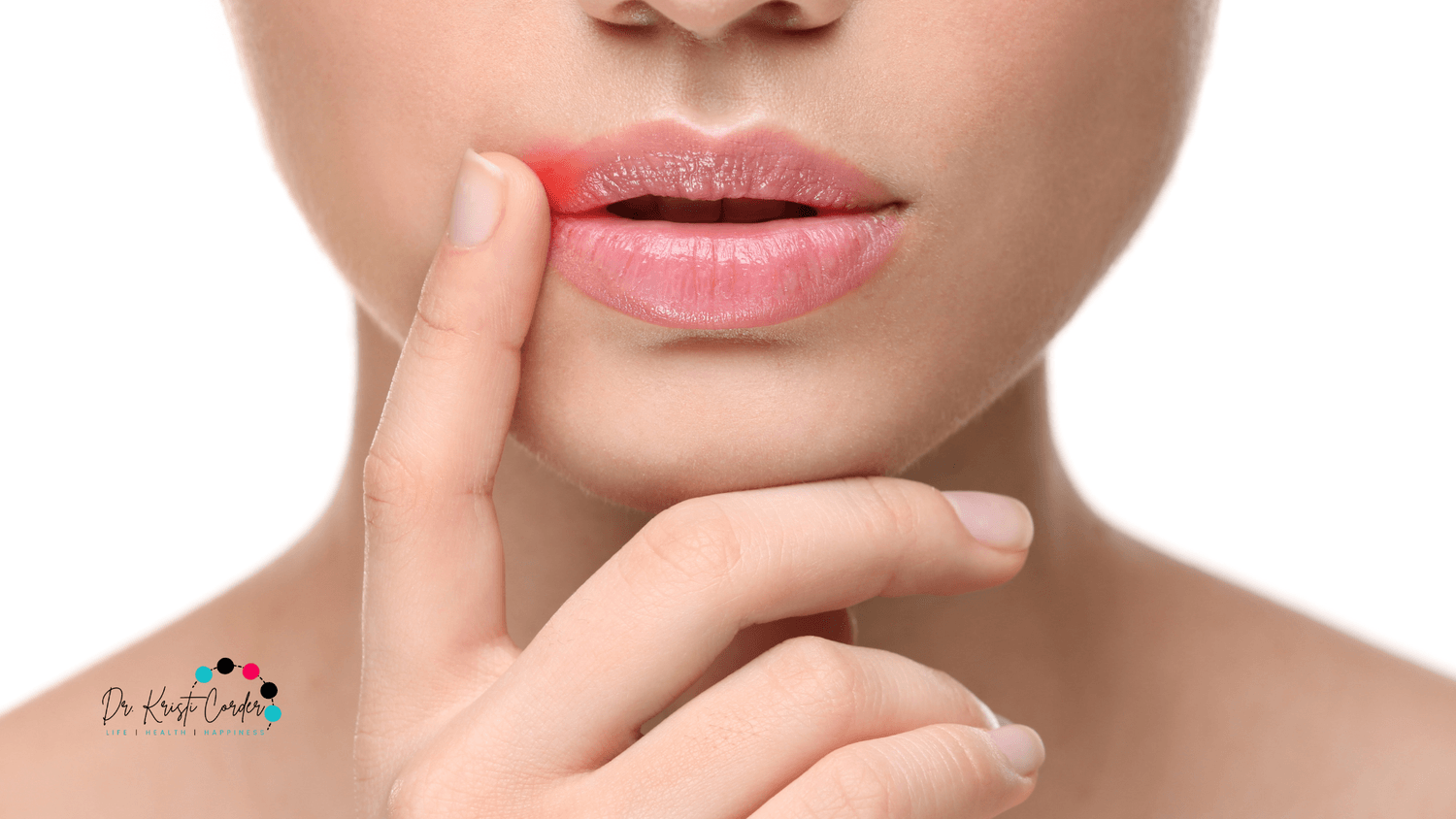
Fever blisters are a pain. Literally! Caused by the herpes simplex one virus (HSV1), fever blisters (also known as cold sores) are painful from beginning to end. They start with tingly red bumps on the lip followed by days or sometimes weeks of painful blisters and end with a crust or scab that splits open every time you open your mouth. They may be small but tend to pack a mighty punch.
According to the Mayo Clinic, they'll go away on their own within 2-3 weeks. But who wants the embarrassment for that long? If you want to know how to lessen the severity, increase healing time, and uproot the sores for good, you've come to the right place!
My struggle with fever blisters
I've had fever blisters for as long as I can remember. Getting them while I was in high school was the worst. I played French Horn in the band. If you've ever played a brass instrument, you can imagine the pain I experienced.
I was also a cheerleader, so I was out in front of hundreds of students, faculty, parents, and members of the community on a regular basis. I'll never forget my friends (one of whom is now my husband) chanting along to one of our cheers yelling
GO!! BIG LIP, LET'S GO!!
Oh the embarrassment! They've been a constant battle my whole life.
Back in 2019, I visited Disneyland with my family. We were there for 3 days straight. And wouldn't you know it, I woke up two days after our vacation with fever blisters not only on the top of my mouth but the bottom too.
That episode wasn't as bad as the episode prior though. That time I had the flu with a fairly high fever, and the day after my illness subsided I woke up to a swollen upper lip. By the end of the day, I had fever blisters completely surrounding my mouth.
I can almost guarantee fever blisters will pop up after one of these 3 situations:
1. too much sun exposure
2. an illness with a fever
3. highly stressful situations
I also tend to get them when I've been around or am going to be around my dad (weird...I know!). He's also plagued with these horrible things and it's a running joke that we'll both end up with fever blisters just from talking on the phone with each other.
So what are the best natural remedies to treat fever blisters?
As you can see, I've had some serious experience in this area. And let me tell you, I've tried it all! Well, almost.
Home remedies for fever blisters
1. Ice cubes
There have been many times that as soon as I feel the onset of a fever blister, I've reached for the ice cubes. Knowing basic first aid, ice reduces swelling and edema, so this option only makes sense. If you've got an area of skin that's is bright red, swollen, and burns, you reach for something cold to soothe it and reduce the swelling. So grab a towel and a couple of ice cubes and massage your lip with the ice until it goes numb. Do this a few times the first day and you'll see the swelling go down, the itchiness and burning subside, and the blister will crust over by the second day.
2. Hydrogen peroxide
This little remedy just makes everything feel better. Hydrogen peroxide helps soothe and cool the area while also keeping it disinfected. Pour some over the blister and let it bubble and dry or dab it on with a q-tip or cotton ball a few times each day.
3. Witch hazel
Similar to hydrogen peroxide, witch hazel is very cooling and soothing to the skin. It has anti-inflammatory and antibacterial properties and does a great job at decreasing pain. Apply with a q-tip or cotton ball a few times per day.
4. Aloe vera
My grandmother was full of great tips when it came to my recurring fever blisters. She grew these fabulous aloe vera plants in her sunroom at her home. Any time I showed up with a fever blister, she'd snap a leaf right off the plant, squeeze the juice out, apply it directly on my blister, and then send me home with a leaf to use later. The juice from the aloe vera plant is very soothing and contains antibacterial and antiviral properties that speed healing.
5. Apple cider vinegar
Apple cider vinegar has great healing properties. It is antimicrobial and helps fight infections. You can drink it diluted in water with a splash of lemon and honey or you can apply it topically to the blisters a few times each day.
Oils and salves to treat fever blisters
1. Tea tree oil
I'm a sucker for tea tree oil. I love the smell of it. This is another remedy my grandmother would suggest for my recurrent fever blisters. It has great antiviral, antimicrobial, and anti-inflammatory properties that can help quickly heal the affected areas. Place a drop on a q-tip or cotton ball and gently dab some of the oil on the fever blister a few times the first couple of days. Be aware this method may sting if you have open sores. You could also dilute the oil in a carrier oil before applying.
*Should you choose to use some of the homeopathic remedies listed further down in this article, do not use peppermint essential oil at the same time as it can potentially antidote the remedy.
2. Peppermint essential oil
Peppermint essential oil has been shown to have a direct virucidal effect on the HSV1 virus when used topically. Apply topically by using a q-tip or cotton ball dipped in a diluted mixture of peppermint essential oil and carrier oil. Apply the oil a few times each day.
*Should you choose to use some of the homeopathic remedies listed further down in this article, do not use peppermint essential oil at the same time as it can potentially antidote the remedy.
3. Coconut oil
Coconut oil is good for so many skin issues, and it's no different for this skin issue. It has antiviral and antibacterial properties to aid in healing and also keeps the area soft and pliable so that cracking and bleeding is minimized once the blister has crusted over. Put a little oil on a q-tip and gently apply it to the blister and surrounding areas frequently each day.
4. Vitamin E oil
Vitamin E oil is an anti-oxidant that can help reduce scarring, relieve pain, and keep the skin soft. Apply topically using a q-tip or cotton ball a few times per day.
5. Grass-fed beef tallow
A friend of mine is into rendering her own beef tallow. I was lucky enough to be on the receiving end of a small jar of the tallow for Christmas one year. According to Mommypotamus, beef tallow contains loads of fat-soluble vitamins and has anti-inflammatory properties which can aid in the healing process. It also helps keep skin soft which is important to prevent the skin from cracking and bleeding when the blister crusts over. Apply a small pea-sized amount of the tallow directly on the blister and the surrounding areas a few times each day.
Nutritional supplements to treat fever blisters
1. Vitamin C
Load up on vitamin C as soon as you feel the first signs of a fever blister. Research has shown that vitamin C plays a key role in boosting our immune system and fighting off infections. You can do this by choosing a high-quality nutritional supplement or by eating foods high in the vitamin (leafy greens, tomatoes, berries, etc.).
2. L-Lysine
Another remedy my grandmother swore by is L-Lysine. It has been known to speed the healing from herpes simplex infection as well as decrease the likelihood of recurrence. Not only can you increase your intake of this supplement at the time of the outbreak, but you can also create a paste to apply topically to aid in healing.
3. Propolis
Propolis is made by honey bees. It's the sticky substance that holds the hive together. Like honey, propolis is antimicrobial, antibacterial, anti-inflammatory, and boosts the immune system. You can find propolis in supplement form or you can chew on pieces of raw propolis to get the same benefits. If you have an allergy to bees, this is one remedy that you should not try.
4. Echinacea
Echinacea boosts the immune system and helps fight infection. You'll need all the help you can get when battling this virus, so find a high quality supplement and take as directed.
Homeopathic medicines to treat fever blisters
Homeopathic medicines not only work with your body to speed up the healing process but also to uproot the condition over time. More information on how homeopathy works can be found in my interview with Joette Calabrese.
If your fever blisters are a chronic occurrence and you're just not seeing them lessen at all with the homeopathic medicines I've listed below, consider setting up a consult with me so that we can choose better homeopathic medicines that will get to the root of the problem.
1. Antimonium crudum
Of all the remedies listed in this article, Ant crud is absolutely my favorite. In her article Cold Sores or Cooties, this is Joette's chosen remedy for fever blisters. When using it for my fever blisters, I have not only seen them crust over in less than 24 hours, but I've also seen both a decrease in outbreaks as well as a decrease in pain associated with the blisters when they form.
2. Natrum muriaticum
Referring back to Joette's article again, you'll see that she also recommends Natrum muriaticum if the fever blisters occur after being exposed to the sun. If you are also prone to dryness and cracking in the corners of the lips, you may also benefit from using this remedy.
3. Rhus toxicodendron
Homeopathic Rhus tox is prepared from poison ivy. If you've ever experienced a poison ivy rash, you'll see it it looks just like fever blister eruptions. Since like cures like in homeopathy, it makes sense that this remedy may assist the body in healing. Rhus tox is indicated when fever blisters occur around the mouth and chin. It's especially helpful when the eruptions are red, burning, and swollen.
4. Arsenicum album
Arsenicum album would be useful for those who experience intense itching and burning with their eruptions. If you shutter at the thought of using ice as I suggest at the beginning of this article, Arsenicum album may be the best remedy for you.
5. Sulphur
In opposition to Arsenicum, someone who may find success using homeopathic Sulphur would have fever blisters with itching and burning that are improved with ice application. The eruptions may get worse with warmth..
6. Sepia
If you are a female, and the fever blisters tend to form around the time of menses, pregnancy, or menopause, look no further than Sepia. This is a common remedy used for any illness or condition that is associated with hormonal changes. According to homeopath Sue Meyer, Sepia should be considered when all of the other remedies seem to fail.
7. Calendula
I agree with Boericke when he says "It's a most remarkable healing agent, applied locally." I personally like to use Calendula in a cream form because it's easy to apply topically to my fever blisters. Not only does it help speed the healing, but it keeps the area soft to prevent drying and cracking.
Homeopathic medicines can be found in a variety of potencies at your local health food store or online. It's always a good idea when self-treating to start with a lower potency such as a 6c or 30c a few times a day. If you find that it's helping, just continue until the issue is resolved. If you use a particular medicine for a couple of days and you see no improvement at all, you likely need to stop and choose a different medicine.
Natural remedies to heal fever blisters are generally readily found and are quick and easy to use. If you suffer from fever blisters, ditch the medications and opt for one or more of these natural methods of treatment. And don't forget to keep your immune system boosted by eating healthy foods, getting regular chiropractic care, and avoiding triggers to lessen the likelihood of recurrence.

Hi! I'm Dr. Kristi!
I’m a wife, mom, and alternative health care practitioner. I like to live a little differently and go against the grain.
I consult with people of all ages who are looking to ditch the drugs for alternative methods of healing. But I’m most passionate about teaching parents how to care for their kids illnesses at home using homeopathy and other alternative health care practices such as nutrition, natural remedies, minimalist ideas, and more. I’m completely obsessed with ice cream, waterfalls, and all things travel related.

Disclaimer: The entire contents of this website are based upon my own opinions unless otherwise noted. I am not a medical doctor and the information on this website is not intended to be a substitute for professional medical advice, diagnosis, or treatment. It is intended as a sharing of knowledge and information from my research and experience. I encourage you to make your own health care decisions based upon your research and in partnership with a qualified health care professional. If you are pregnant, nursing, taking medication, or have a medical condition, consult your health care professional before using products based on this content.
The information on this website has not been evaluated by the FDA and is not intended to diagnose, treat, cure or prevent any disease.
By using this website, you agree to abide by this disclaimer as well as the Terms of Service, Disclosure Policy, and Privacy Policy.
Copyright 2023 | Dr. Kristi Corder | All Rights Reserved


